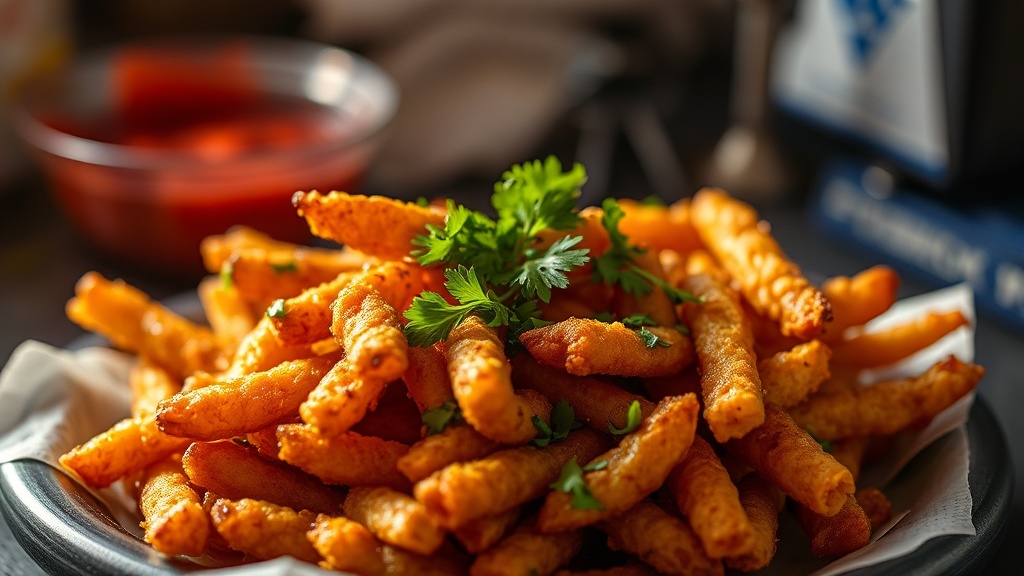
Crispness Elevated: Achieving Satisfying Texture Without the Deep Fry

The Quest for Texture: Why Your Dishes Deserve to be Crispy
Imagine pulling what should be a golden, crunchy chicken thigh from the oven, only to find a sad, rubbery skin. Or anticipating those perfectly crisp oven-roasted potatoes, only to bite into something disappointingly soft. This common culinary frustration stems from a straightforward challenge: moisture. Achieving a truly satisfying crispness without submerging food in hot oil might seem like a dark art, but it's fundamentally about managing water content and applying heat effectively. This guide will walk you through the precise techniques and considerations that transform ordinary dishes into textural triumphs, all without the mess, added fat, or specialized equipment of deep frying. You'll learn how to approach everything from vegetables to proteins with a fresh perspective, turning out food with that coveted crunch every time.
Why do foods fail to crisp in a conventional oven?
The oven, while versatile, can be a saboteur of crisp textures if not used with intent. The primary culprit? Moisture—both from the food itself and from the cooking environment. When you pack too many items onto a single baking sheet, for instance, the food effectively steams rather than roasts. There isn't enough space for the circulating hot air to evaporate surface moisture, leaving you with limp results. Think of it like a crowded sauna versus a dry desert; the sauna retains humidity, preventing true drying and browning.
Another frequent misstep is insufficient preheating. Dropping food into a cold or lukewarm oven means it spends valuable early minutes slowly heating up, allowing more internal moisture to leach out and steam the surface, again hindering crispness. A properly preheated oven, on the other hand, immediately begins to aggressively evaporate surface moisture, initiating the glorious Maillard reaction that creates those delectable brown, crispy bits. It's a foundational step many overlook.
Furthermore, selecting the wrong bakeware can impede success. Using pans with low sides or, better yet, a wire rack set inside a baking sheet, allows air to circulate around all surfaces of your food. This maximizes evaporation and direct heat contact, ensuring even browning and crisping. Contrast this with high-sided casserole dishes, which, while excellent for braises, trap steam and moisture—precisely what we want to avoid when seeking crunch. For a deeper dive into the science of how heat interacts with food, consider reading up on the