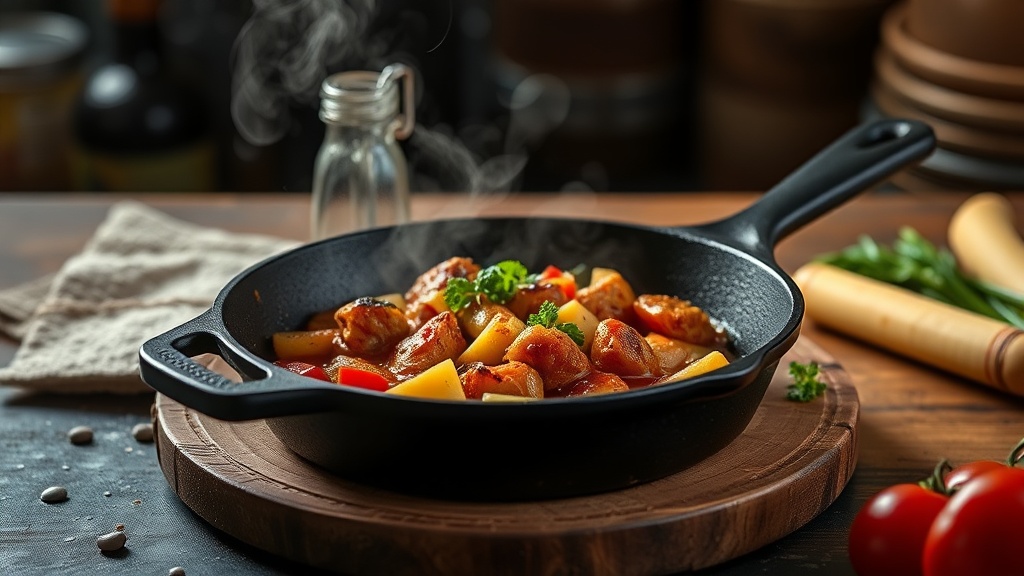
Getting the Best Results from Cast Iron Skillet Cooking

Everything you need to know about using cast iron effectively
You're going to learn how to manage heat, maintain your pans, and cook food that actually sticks to the skillet instead of the pan surface. Cast iron is a staple in many kitchens, but it's often misunderstood or treated with too much fear. This guide covers the practicalities of temperature control, seasoning maintenance, and the specific ways this heavy metal changes how your food reacts to heat.
Most people think cast iron is high-maintenance. In reality, it's quite durable—you just have to respect the physics of it. Unlike thin stainless steel or non-stick coatings, cast iron is a heat reservoir. It takes a long time to get hot, but once it's there, it stays there. That's the key to a perfect sear.
Why does my food stick to the pan?
If you've ever tried to flip a steak or a pancake only to have it tear into pieces, you've experienced the frustration of poor cast iron management. There are three main reasons this happens:
- Temperature Shock: You didn't wait long enough for the pan to reach the right heat before adding fat or food.
- Lack of Seasoning: The polymer layer (the seasoning) is either too thin, uneven, or has been stripped away by harsh soaps.
- Moisture: You added wet food to a hot pan, causing an immediate steam reaction that glues the proteins to the metal.
To avoid this, always preheat your skillet for at least five to ten minutes on low-medium heat before you even think about adding oil. If you're cooking something high-protein like a steak, you want that pan screaming hot. A simple test is the water droplet method: drop a small amount of water onto the surface. If it sits there, the pan isn't ready. If it dances and evaporates instantly (the Leidenfrost effect), you're good to go.
How do I maintain a non-stick surface naturally?
People often ask if they can use soap. The short answer is yes—modern dish soaps won't strip a well-seasoned pan—but you shouldn't be scrubbing it with heavy abrasives every single time. You want to build a layer of carbonized oil through a process called seasoning.
Seasoning isn't just a coating; it's a chemical bond. When you heat oil to its smoke point, the oil undergoes polymerization. It turns from a liquid into a hard, plastic-like solid that fills the microscopic pores of the iron. To keep this healthy, follow these steps:
- Clean: Use hot water and a stiff brush. If there's stuck-on bits, a bit of coarse salt and a little oil can act as an abrasive.
- Dry: This is the most important part. Never let your pan air dry. Put it back on a low burner for a minute to evaporate every trace of moisture.
- Oil: While the pan is still warm, rub a very thin layer of oil (like grapeseed or canola) across the surface.
- Buff: Wipe it out with a clean paper towel until it looks like there's nothing left. If you leave a thick layer of oil, it will become sticky and gummy.
For more technical details on the chemistry of seasoning, the