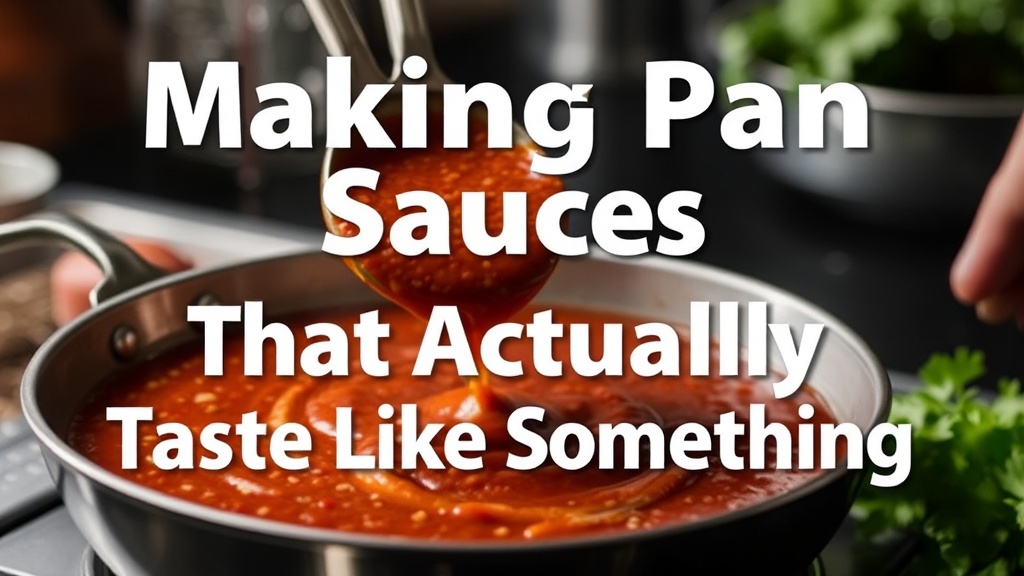
Making Pan Sauces That Actually Taste Like Something

Why Does Fond Matter So Much for Flavor?
You'll learn how to transform those stuck-on brown bits in your skillet into a sauce worth pouring over your protein—no cornstarch slurries, no jarred gravies, just proper technique and a few pantry staples. The foundation of every great pan sauce lies in what's already stuck to your pan after searing meat. That layer of caramelized proteins and sugars—called fond—holds more concentrated flavor than the meat itself. When you scrape it up with liquid (that's deglazing), you're dissolving months of Maillard reaction complexity into seconds.
Building good fond starts before the meat hits the pan. Your skillet needs to be hot enough that water droplets evaporate within two seconds of contact—but not so hot that the oil smokes aggressively. Pat your protein dry with paper towels; moisture is the enemy of browning. When the meat hits the metal, don't move it. Let it sit undisturbed until it releases naturally, usually three to four minutes depending on thickness. That sticking-then-releasing motion indicates the proteins have caramelized properly.
The color of your fond matters more than you might think. You want deep brown—almost mahogany in spots—but never black. Black means bitter carbon, and no amount of wine will save that. If you see smoke or smell acrid notes, your pan is too hot. Pull it off the burner for thirty seconds, wipe out the burned bits with a damp paper towel (carefully), and start fresh with new oil. Good fond smells nutty, toasted, almost like roasted coffee or browned butter. Trust your nose here; it's your most reliable tool for determining when you've captured flavor versus when you've crossed into burned territory.
What's the Best Liquid for Deglazing?
Wine gets the glory in cooking shows, but it's not always your best choice. The liquid you pour into the hot pan determines the backbone of your sauce's personality. Red wine brings tannins and dark fruit notes that pair beautifully with beef and lamb. White wine offers acidity and a brighter profile that complements chicken, pork, and fish. But stock—whether chicken, beef, or vegetable—builds body in a way wine alone cannot. Many chefs use a combination: wine first to dissolve the fond, reduced until syrupy, then stock added to build volume.
Vinegar and citrus juice work too, though you'll use them in smaller amounts. A tablespoon of sherry vinegar or lemon juice added after reduction brightens a heavy sauce in ways that wine cannot. Some classic French preparations call for spirits—brandy, cognac, or Calvados—flambéed to burn off the harsh alcohol while leaving complex volatile compounds behind. If you're cooking for someone avoiding alcohol, high-quality vinegars (balsamic, sherry, apple cider) provide similar acidity without the booze. Just remember the ratio rule: one part acid to three parts stock creates a balanced foundation that won't strip the enamel off your teeth.
When you pour your liquid into the hot pan, it will sputter violently—that's the water hitting hot fat and metal. Scrape immediately with a flat wooden spoon or metal spatula (if using stainless steel). You want to agitate every millimeter of the pan's surface where fond has developed. The liquid will darken within seconds as it dissolves the browned bits. If you're using wine, let it reduce by half before adding stock; this burns off the raw alcohol flavor and concentrates the grape sugars. For a deeper dive into which wines work best for cooking versus which ones you should save for drinking, Serious Eats offers an excellent breakdown of cooking wines and their flavor profiles.
How Do I Know When My Sauce Is Reduced Enough?
Reduction concentrates flavor by evaporating water, but there's a tipping point where your sauce becomes salty or bitter rather than rich. The classic test is called "nappe"—French for "to coat." Dip a spoon into the sauce, turn it over, and run your finger through the coating on the back. If the line holds without dripping, your sauce has reached proper consistency. This usually means reducing your liquid by half to two-thirds, depending on what you started with.
Visual cues help too. Bubbles change character as sauces reduce. Watery liquids produce large, bursting bubbles that sound aggressive. As the sauce thickens (naturally, through reduction—not added thickeners), the bubbles become smaller, tighter, and more controlled—like foam on espresso. The sauce will also cling to your spoon differently, sliding off slowly rather than running like water. Pay attention to these visual shifts; they're telling you the concentration is happening.
Temperature control during reduction determines your final texture. Too hot, and you'll boil off delicate aromatic compounds while potentially burning sugars. Too cool, and you'll be standing there for twenty minutes watching barely perceptible evaporation. Aim for a gentle simmer—small bubbles breaking the surface consistently but not vigorously. Stir occasionally to prevent sticking, especially as the sauce thickens. If you accidentally over-reduce and the sauce becomes too thick or salty, whisk in small amounts of stock or water to bring it back. For scientific explanations of how reduction concentrates flavor compounds, America's Test Kitchen explains the chemistry behind sauce reduction with their typical thoroughness.
Why Does My Sauce Taste Flat Even After Reducing?
You've built the fond, deglazed properly, reduced carefully—yet something tastes missing. Flat sauces usually lack acid. Salt enhances flavor, but acid brightens it, giving dimension to what would otherwise be a one-note, meaty liquid. Taste your sauce right before finishing. If it tastes "brown"—savory but dull—squeeze in fresh lemon juice or add a splash of vinegar. The transformation is immediate and remarkable. Start with half a teaspoon, taste, and adjust. You want the sauce to taste lively, not tart.
Fresh aromatics added at different stages create layers. Minced shallots or garlic sautéed in the fat before deglazing build a savory base. But fresh herbs—parsley, chives, tarragon—should go in at the very end. Heat destroys their volatile oils within minutes, so adding them right before serving preserves their brightness. Mustard (Dijon works best) emulsifies into pan sauces beautifully, adding both acid and subtle heat. A teaspoon whisked in during the final minute bridges the gap between rich meat flavors and sharp, palate-cutting brightness.
Seasoning timing matters more than most home cooks realize. If you salt your sauce early in the reduction process, that salt concentrates as water evaporates—often becoming overwhelming. Instead, salt lightly during cooking and adjust at the end. Freshly cracked black pepper should wait until finishing too; pre-ground pepper loses its bite during long simmering. For a comprehensive guide on balancing flavors in cooking, Bon Appétit's article on flavor balance provides practical frameworks for understanding how acid, salt, fat, and heat interact.
Which Butter Technique Works Best for Finishing?
The French call it "monter au beurre"—mounting with butter—and it's what separates restaurant sauces from home attempts. Cold butter, whisked into a hot sauce off the heat, creates emulsification that adds body, sheen, and a velvety texture you cannot achieve with oil or room-temperature butter. Cut your cold butter into small cubes—about one tablespoon per serving. Remove the pan from heat. Add the butter one piece at a time, whisking constantly until each cube dissolves before adding the next.
This technique works because butter contains milk solids and water alongside fat. As the cold butter hits the hot sauce, the water content evaporates slightly while the milk solids emulsify with the reduced liquid, creating that characteristic glossy finish. If your butter separates and you see oil pooling on top, your sauce was too hot or you added the butter too quickly. You can sometimes rescue it by whisking in a splash of cold stock or cream to force re-emulsification.
Compound butters—butter mixed with herbs, citrus zest, or spices—work beautifully here too. A pat of garlic-herb butter or blue cheese butter melted into your pan sauce at the last second adds complexity without extra steps. The key remains temperature control. If the sauce boils after adding butter, the emulsion breaks and you're left with greasy liquid rather than silky sauce. Patience wins here; better to take thirty seconds longer than to rush and lose the texture you've worked ten minutes building.
Building pan sauces becomes intuitive with practice. You'll start recognizing fond by sight and smell, knowing instinctively when the pan is ready for liquid. You'll develop preferences—perhaps you like vermouth instead of white wine, or tarragon vinegar instead of lemon. The technique remains the same: capture flavor, dissolve it, concentrate it, enrich it. That's all any pan sauce really is—a way to make sure nothing flavorful stays stuck to the bottom of your pan.