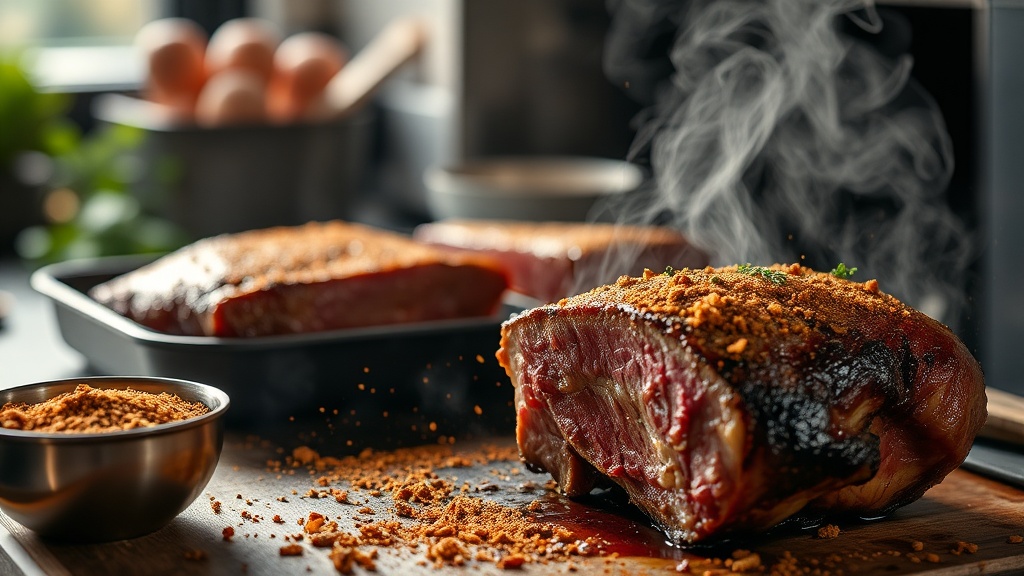
The Power of Dry Brining: Elevating Your Roasts and Grills

Unlock Juicier Meats and Crispier Skin with Simple Salting
This guide will teach you the straightforward, incredibly effective technique of dry brining, showing you how a little foresight and a sprinkle of salt can dramatically improve the texture and flavor of your favorite meats—from poultry to pork and beyond. Understanding this method means consistently achieving juicier results and wonderfully crisp skin, transforming everyday cooking into something special.
Dry brining, at its core, is just salting meat ahead of time. Unlike wet brining, which submerges meat in a saltwater solution, dry brining involves rubbing salt directly onto the surface of your protein. This simple act kicks off a fascinating scientific process that leaves you with meat that's not only more flavorful but also better at retaining moisture during cooking.
Why Does Dry Brining Make Such a Difference?
Many home cooks might worry about salting meat too early, fearing it will dry out. But with dry brining, the opposite happens. The process works in stages:
- Drawing Moisture Out: Initially, the salt applied to the surface of the meat draws out some of its natural moisture through osmosis. You might see beads of liquid forming on the surface—that's completely normal and part of the process.
- Creating a Concentrated Brine: The salt then dissolves in this surface moisture, creating a highly concentrated saltwater solution, or a natural brine, right on the meat’s exterior.
- Reabsorption and Protein Restructuring: Over time—and this is where the magic truly happens—the meat reabsorbs this salty liquid. The salt travels deep into the muscle fibers, breaking down some of the proteins (specifically myosin). This denaturation allows the muscle cells to hold onto more moisture when they cook, preventing them from seizing up and expelling their juices. The result is meat that stays incredibly tender and moist, even after high-heat cooking.
Beyond juiciness, dry brining also contributes significantly to flavor. Because you're not adding any extra water, the meat's natural flavors aren't diluted. Instead, they're concentrated and enhanced by the salt. For poultry, an added benefit is wonderfully crisp skin. When the meat sits uncovered in the refrigerator after salting, the skin dries out, which is exactly what you want for maximum crispiness in the oven or on the grill.
How Long Should You Dry Brine Your Protein?
The duration of dry brining largely depends on the type and size of the meat you're preparing. It's a forgiving process, but there are some general guidelines to follow for optimal results. Think of it as a spectrum: smaller, thinner cuts need less time, while larger, denser pieces benefit from longer periods.
- Smaller Cuts (Steaks, Chops, Chicken Pieces): For individual chicken breasts, pork chops, or steaks, as little as 1 to 4 hours can make a noticeable difference. You'll still get some moisture retention and flavor penetration without needing to plan too far ahead.
- Medium Cuts (Whole Chickens, Roasts): A whole chicken, a small pork roast, or a turkey breast will generally benefit from 12 to 24 hours of dry brining. This allows the salt sufficient time to work its way through the denser parts of the meat.
- Large Cuts (Whole Turkeys, Large Roasts): For impressive cuts like a whole turkey or a substantial beef roast, extending the dry brine to 24 to 72 hours is ideal. This ensures the salt penetrates deep into the thickest parts, guaranteeing flavor and moisture throughout.
Always remember to keep your brining meat in the refrigerator at 40°F (4°C) or below for food safety. It's also a good practice to place the meat on a wire rack set over a baking sheet. This promotes air circulation around all sides, aiding in the drying of the skin and ensuring even brining. For detailed food safety guidelines, the