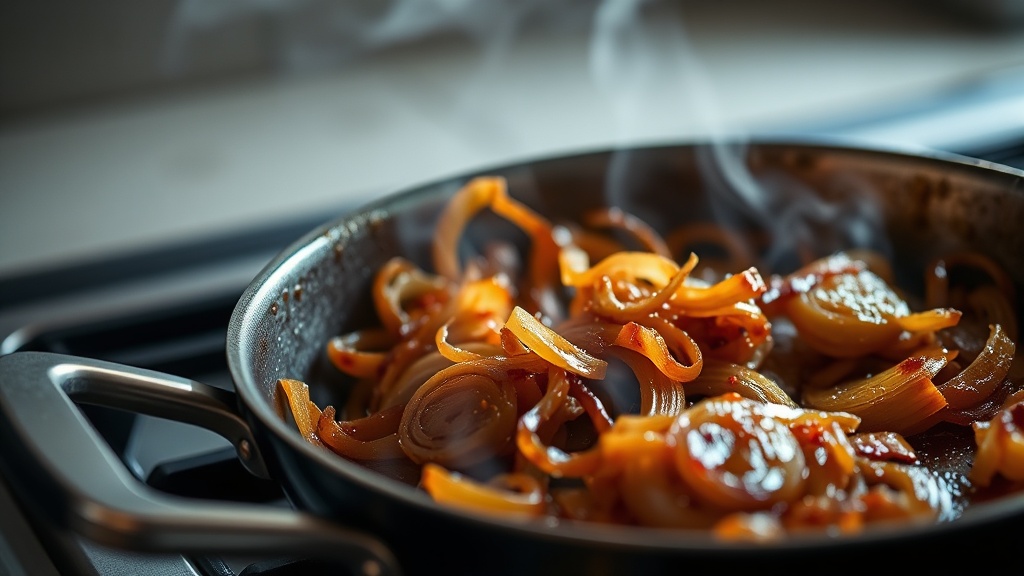
The Secret to Perfectly Caramelized Onions Every Time

Caramelized onions transform ordinary dishes into something extraordinary. This post breaks down the exact techniques, temperatures, and timing needed to achieve deep golden sweetness without burning. Whether you're topping a burger, stirring into risotto, or building a French onion soup base, you'll learn the method that delivers consistent results every single time.
What Is the Best Onion Variety for Caramelizing?
Yellow onions win. The high sulfur content and balanced sugar levels make them ideal for the Maillard reaction. Sweet onions like Vidalia or Walla Walla work too, but they contain more water and less of that sharp, complex flavor that defines truly great caramelized onions.
Here's the thing — red onions and white onions aren't wrong choices, just different. Red onions turn an unappetizing grey-brown and carry a slightly bitter edge. White onions caramelize faster due to lower sugar content, which sounds good until they burn while you're still slicing the next one.
Size matters less than freshness. Avoid onions with soft spots, sprouting green shoots, or that hollow sound when tapped. In Fredericton, the farmers' market on George Street reliably stocks firm, heavy yellow onions from September through March. For year-round consistency, Kroger's organic yellow onions perform admirably.
Slice uniformly. A mandoline set to 3mm produces even slices that cook at the same rate. The OXO Good Grips mandoline ($29.99) handles this task safely. Hand-slicing works fine if your knife skills are solid — just commit to quarter-inch slices and maintain that thickness throughout.
Why Does Caramelizing Onions Take So Long?
Real caramelization requires 35 to 45 minutes of active cooking. The process involves slowly converting onion sugars through the Maillard reaction and actual caramelization — two different chemical processes happening simultaneously. Rush it and you get browned, bitter onions. Do it right and you get sweet, jammy perfection.
Many recipes lie. They promise caramelized onions in fifteen minutes. What they deliver is sautéed onions — pleasant, translucent, but lacking that deep mahogany color and complex sweetness. The catch? There's no shortcut that doesn't compromise quality. Pressure cookers, baking soda, and sugar additions all produce inferior results.
Heat control makes or breaks the process. Start with medium-high heat to soften the onions and drive off surface moisture — about five minutes. Then reduce to medium-low for the long haul. The Le Creuset enameled Dutch oven ($380) maintains steady heat distribution, though any heavy-bottomed stainless steel pan works. Avoid thin aluminum pans that create hot spots.
Stirring frequency surprises people. For the first twenty minutes, stir only every three to four minutes. Constant stirring prevents browning. After the onions soften significantly and release their moisture, increase stirring to every minute. This prevents burning while encouraging even color development.
What Temperature Should You Cook Caramelized Onions?
Maintain the pan between 250°F and 300°F for optimal results. Below 250°F, onions steam instead of caramelize. Above 300°F, they burn before developing sweetness. A simple laser thermometer (the ThermoWorks ThermoPop at $35 works well) removes guesswork.
Visual cues matter more than numbers. The onions progress through distinct stages:
- Transparent (5-8 minutes): Softened, releasing moisture, no color yet
- Blonde (10-15 minutes): Light golden edges, beginning to smell sweet
- Golden (20-30 minutes): Rich amber color, significantly reduced volume
- Deep mahogany (35-45 minutes): Intense sweetness, jam-like consistency
Worth noting — the fond (those brown bits stuck to the pan) isn't burning; it's flavor concentrate. Deglaze periodically with water, stock, or wine. Two tablespoons of liquid scraped up with a wooden spoon adds complexity without steaming the onions. Dry sherry works beautifully. So does Williams Sonoma's house chicken stock if you keep it on hand.
Equipment Comparison: What Works Best
| Pan Type | Heat Retention | Cleanup | Best For |
|---|---|---|---|
| Cast Iron (Lodge 12-inch) | Excellent | Moderate | Large batches, frequent use |
| Enameled Dutch Oven (Le Creuset) | Superior | Easy | Consistent results, beginners |
| Stainless Steel (All-Clad D3) | Good | Requires effort | Experienced cooks, fond development |
| Non-stick (T-fal Ultimate) | Poor | Easy | Small batches, quick cleanup |
Can You Caramelize Onions Faster Without Ruining Them?
No. Techniques promising speed — baking soda, sugar, high heat, pressure cooking — all produce compromised results. Baking soda accelerates breakdown but creates mushy texture and an odd, chemical aftertaste. Added sugar burns before integrating properly. High heat burns the exterior while leaving the interior raw.
That said, you can work efficiently. Slice all onions first. Use a large enough pan — overcrowding steams instead of caramelizes. A 12-inch skillet handles three large onions comfortably. For bigger batches, work in stages or use multiple pans.
The real time-saver? Make a large batch and store properly. Caramelized onions keep refrigerated in an airtight container for five days. Freeze flat in freezer bags (press out all air) for up to three months. Thaw overnight in the refrigerator or gently in the microwave.
Reheating requires care. Low heat in a skillet with a splash of water restores texture. The microwave works in 30-second bursts with stirring between. Don't refreeze once thawed — the texture suffers.
Common Mistakes to Avoid
Too much fat drowns the onions. Two tablespoons of butter or oil per three large onions suffices. More than that and you're frying, not caramelizing. Too little and sticking becomes inevitable.
Salt timing trips people up. Salt early — it helps draw out moisture and seasons throughout. Waiting until the end produces bland onions with surface saltiness.
Impatience destroys more batches than any other factor. The onions will look done before they actually are. Wait for that deep mahogany color. When in doubt, give it five more minutes.
Adding liquids too early stalls the process. Wine, stock, or water should only deglaze fond, not simmer the onions. If the pan looks dry before fond forms, reduce heat slightly — don't add liquid.
How Do You Use Caramelized Onions?
The applications extend far beyond topping burgers. Stir into sour cream with herbs for an instant dip. Fold into omelets or frittatas. Top flatbreads with goat cheese and thyme. Mix into meatloaf for moisture and depth. Layer in grilled cheese sandwiches (extra sharp cheddar works beautifully).
French onion soup demands proper caramelization — it's the foundation, not an accent. The broth supports; the onions star. Similarly, onion tart (pissaladière) requires onions cooked down to near-jam consistency.
Pizza benefits enormously. Scatter over any white pizza, or add to a classic Margherita for sweetness against the acidic tomato. Bon Appétit recommends pairing caramelized onions with taleggio and rosemary on sourdough crust.
Compound butter improves steaks dramatically. Blend cooled caramelized onions into softened butter with parsley and black pepper. Roll into a log, chill, and slice onto hot meat. The contrast of cold flavored butter and seared beef creates something memorable.
Storage and Make-Ahead Strategy
Smart cooks batch-caramelize. Dedicate an hour on Sunday to processing four or five pounds. Portion into half-cup containers or freezer bags. You'll have the foundation for quick weeknight meals all week.
Label with dates — frozen onions look identical to fresh. Portion sizes should match typical uses: half-cup for two people, full cup for soups or tarts.
Never store warm onions sealed. Condensation creates bacterial growth conditions. Cool completely on the counter, then refrigerate promptly. The FDA recommends refrigerating cooked vegetables within two hours of cooking.
Mastering caramelized onions changes cooking. That deep, sweet complexity transforms simple ingredients into restaurant-quality dishes. The technique isn't difficult — it requires patience, attention, and respect for the process. Start with good yellow onions, a heavy pan, and forty-five uninterrupted minutes. The results justify every second.