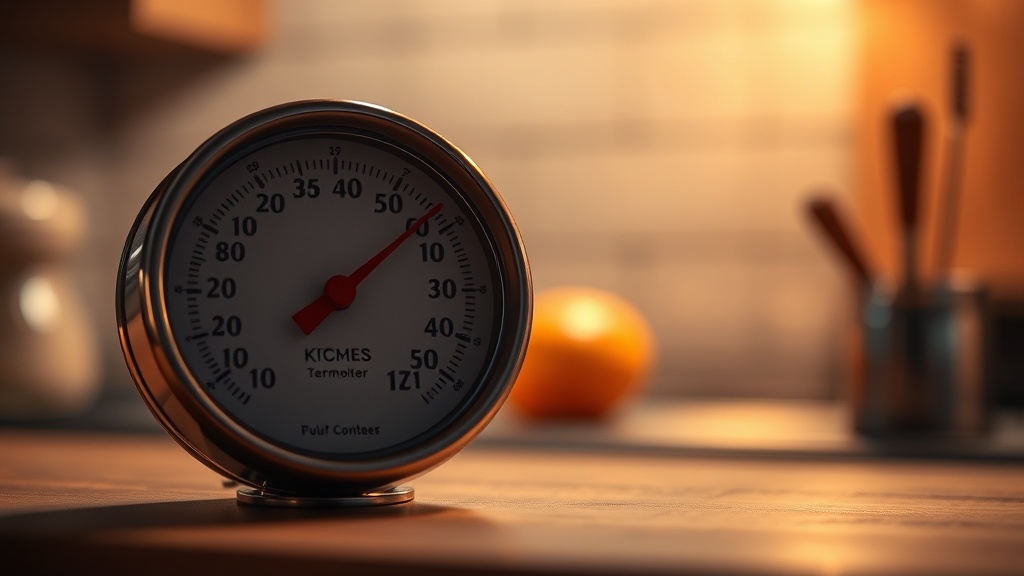
Why Does Your Kitchen Thermometer Lie to You (And What to Do About It)

You think you're cooking chicken to 165°F, but it's still pink inside. Your candy thermometer says the syrup hit hard-crack stage, yet your brittle turns out chewy. Temperature is the invisible force that determines whether dinner becomes a triumph or takeout — and most home cooks trust tools that are actively misleading them. This post covers the most common temperature mistakes that sabotage your cooking, the simple fixes that professional kitchens use daily, and the affordable gear that actually works.
Why Is My Meat thermometer So Inaccurate?
Here's the uncomfortable truth: that $8 instant-read thermometer from the grocery store drawer is probably off by 10 to 15 degrees. Cheap thermometers use bimetallic strips that warp over time, especially if they've been through the dishwasher (which they shouldn't be). Worse, many home cooks don't know the difference between a meat thermometer and a candy thermometer — they're not interchangeable, and using the wrong one ruins both.
The fix starts with calibration. Professional kitchens check their thermometers weekly using the ice water method: fill a glass with crushed ice, add water, insert the probe (not touching the sides), and wait 30 seconds. It should read 32°F. If it doesn't, many digital models have a calibration button; analog ones have a nut on the back you can adjust with pliers. Do this monthly, and you'll already be ahead of 90% of home cooks.
But accuracy isn't just about the tool — it's about placement. Sticking a probe into the center of a roast sounds right, but heat conducts differently through bone and fat. For poultry, go into the thickest part of the thigh, avoiding the bone. For steaks, insert horizontally from the side to hit the geometric center. And never trust those little pop-up thermometers that come in supermarket turkeys; they're set to trigger at 185°F, guaranteeing dry, stringy meat.
What's the Deal with "Resting" Meat and Carryover Cooking?
You've heard it a thousand times: "Let your meat rest." But most recipes don't explain why — and that missing context costs you juicy results. When meat cooks, the muscle fibers contract and squeeze moisture toward the surface. Cut into a steak straight off the heat, and all that pressure releases onto your cutting board. Rest for even five minutes, and those fibers relax, reabsorbing some of that moisture.
Here's what recipes rarely mention: carryover cooking. A thick pork chop pulled from a hot pan at 140°F will climb to 148°F or even 150°F while resting. Professional cooks call this "pulling early" — they remove proteins 5 to 10 degrees below target because the internal temperature keeps rising. The thicker the cut, the more dramatic the climb. A whole roasted chicken can jump 15 degrees during a 10-minute rest.
The practical takeaway? Buy a thermometer, set an alarm for 5 to 10 degrees below your target, and have the discipline to wait. That resting period isn't passive — it's the final, active phase of cooking. Use it to finish your pan sauce, dress your salad, or pour yourself a drink. Your patience gets rewarded with meat that's properly cooked edge-to-edge instead of a gray ring surrounding a raw center.
How Do Professional Bakers Control Oven Temperature So Precisely?
Your oven dial says 350°F. Your oven is lying. Home ovens cycle 25 to 50 degrees above and below their set point, creating waves of temperature that wreck sensitive bakes. Soufflés fall, custards curdle, and cakes dome because the oven overshot. Then they sink because it undershot. The problem isn't your technique — it's that you're cooking in a roller coaster.
Bakeries use deck ovens with stone or steel surfaces that retain heat and distribute it evenly. You can fake this at home with a pizza stone or steel placed on the middle rack. These thermal masses absorb the spikes and release heat during the drops, smoothing out those wild swings. For bread especially, this makes the difference between a pale, under-risen loaf and one with proper oven spring and caramelization.
An oven thermometer is non-negotiable for serious baking. Not the kind that hangs from the rack — those are inaccurate by design. Get a probe thermometer with a cable that snakes through the door seal, or a wireless model that pairs with your phone. Place it where your food actually sits, not near the heating element. You'll likely discover your oven runs 25 degrees hot or cold, and that knowledge changes everything about timing and results.
Why Does Oil Temperature Matter More Than You Think?
Deep frying at home fails for one predictable reason: the oil temperature drops when food goes in, and most cooks don't compensate. Drop a basket of cold french fries into 350°F oil, and the temperature plummets to 280°F in seconds. At that temp, the food absorbs oil instead of cooking — you get greasy, pale results instead of crisp, golden ones.
The solution is thermal mass again. Use a heavy pot (enameled cast iron is ideal) and don't crowd it. Fry in small batches that the oil can recover from quickly. Better yet, use a deep-fry thermometer with a clip — not just for the initial heat-up, but throughout cooking. Adjust your burner constantly to maintain temperature. Yes, it's active work, but it's the difference between restaurant-quality fried chicken and something you'd find at a sad buffet.
Don't forget carryover happens here too. Oil clings to food and keeps cooking it after removal. Pull fried items when they're slightly lighter than your target color — they'll darken as they drain. And for the love of all things crispy, drain on a wire rack, not paper towels. Paper traps steam and creates a soggy bottom; a rack lets air circulate and preserves that hard-won crunch.
What Temperature Mistakes Are Ruining Your Vegetables?
Vegetables cook in one of two zones: the Maillard zone (above 300°F) where they brown and develop flavor, or the steam zone (212°F and below) where they soften without color. Most home cooks live in the messy middle — high enough to drive off moisture slowly, but not hot enough to actually brown anything. The result is gray, limp vegetables that neither roast nor steam properly.
Roasting demands a hot oven — 425°F minimum, 450°F ideally. The vegetables need to dry and brown before they steam in their own juices. That means space: if they're crowded, they stew. Use two sheet pans instead of one if needed. And start with a hot pan — stick it in the oven while it preheats, then add oiled vegetables to the screaming-hot surface. You'll hear the sizzle that signals proper caramelization.
Delicate vegetables like asparagus and green beans are different. They benefit from blanching in boiling salted water (212°F exactly), then shocking in ice water to stop cooking. This preserves bright color and crisp-tender texture. The mistake here is under-salting the water — it should taste like the ocean. Properly seasoned blanching liquid seasons the vegetable from the inside out, something no amount of post-cooking salt can replicate.
How Can You Build Temperature Awareness into Daily Cooking?
Great cooking isn't about memorizing temperatures — it's about developing intuition through repetition. Start checking your food earlier than recipes suggest. Touch proteins as they cook (use the "touch test" for steak: relaxed hand for raw, thumb-to-index for medium-rare, thumb-to-pinky for well-done). Listen for the sizzle that indicates proper pan heat. These sensory cues build over time into an almost automatic awareness.
Keep a kitchen notebook. Record the final internal temperature of your roasts, the oil temp when frying succeeded, the oven setting that finally browned your cookies. After a few months, patterns emerge. You'll know that your particular oven needs 375°F on the dial to deliver a true 350°F. You'll learn that your stovetop's "medium-high" is everyone else's "medium." This personalization is what separates competent cooks from consistent ones.
Finally, invest where it counts. A $100 thermocouple thermometer will outlast and outperform ten $10 models. A $50 pizza steel transforms your oven into something approaching professional. These aren't gadget indulgences — they're force multipliers that fix the single biggest variable in cooking: knowing exactly how hot things actually are.
"Cooking is an act of love, but temperature is the language. Learn to speak it fluently, and everything else follows."