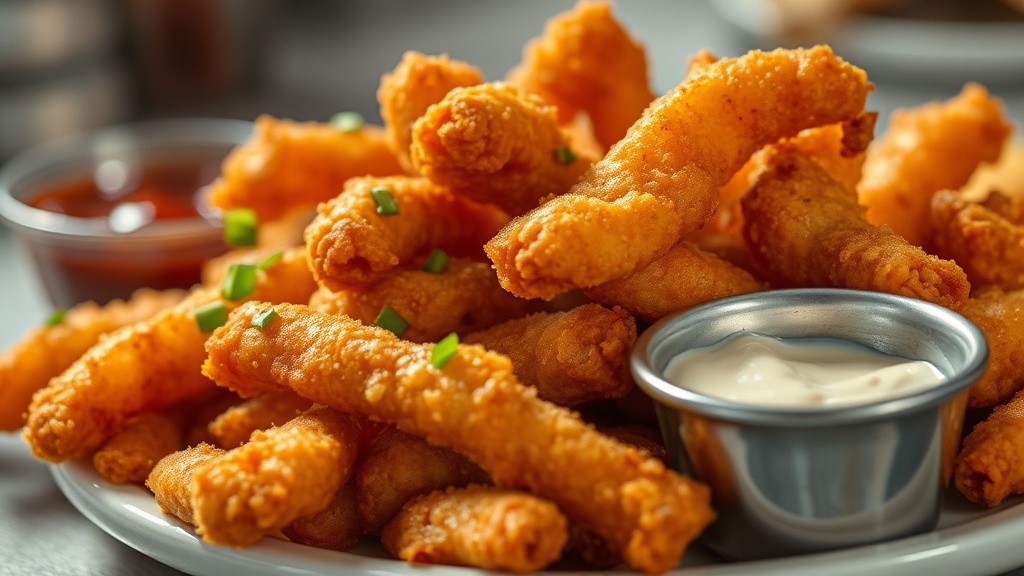
Why Your Home-Fried Food is Always Greasy and Sad

The Myth of the Oil-Soaked Sponge
You probably think that deep frying at home is a guaranteed way to end up with a soggy, oil-soaked mess that ruins your kitchen and your appetite. That's a myth born from bad technique—not the oil itself. If your fried chicken or calamari comes out dripping in grease, it's not because you used too much fat; it's because you didn't manage your heat or moisture properly. We're talking about the mechanics of the steam barrier and why your choice of pot matters more than the fancy breading you spent twenty minutes prepping. This is about getting that shatter-crisp texture without the heavy, gut-punch feeling of poorly executed street food.
When you drop food into hot oil, the water inside that food immediately turns to steam. This steam creates an outward pressure—a literal wall of vapor—that prevents the oil from soaking into the food. As long as that steam is pushing out, the oil stays out. The moment that pressure drops, the oil rushes in to fill the void. This is the fundamental rule of frying: keep the steam moving until the exterior is sealed and crispy. If you fail at this, you aren't frying; you're just poaching your dinner in lukewarm fat. It's a frustrating mistake that many home cooks in Fredericton and beyond make because they're afraid of the heat, but being timid is exactly what leads to greasy results.
What is the best temperature for deep frying at home?
The magic number for most home frying is between 350°F and 375°F (175°C to 190°C). If you're trying to eyeball this without a thermometer, you're setting yourself up for failure. Oil that's too cool won't trigger that immediate steam barrier we just talked about. Instead, the breading will just sit there, absorbing liquid fat like a piece of bread in a puddle. By the time the food actually cooks through, it’ll be heavy and unappealing. You can find detailed guidance on these temperature thresholds at Serious Eats, where they break down the thermal physics of the process.
Conversely, oil that's too hot will burn your exterior before the middle even thinks about getting warm. You’ll end up with a carbonized crust and raw chicken. You need a clip-on probe thermometer or an infrared heat gun—don't guess. Even a few degrees can make a difference in how the starches in your batter hydrate and crisp up. When the oil hits the right temp, the reaction is violent and immediate. That's what you want. You should see a vigorous bubbling; that's the sound of success. It's the sound of water leaving the building so the oil can't get in.
Why does my fried food always come out soggy?
The biggest culprit is usually thermal mass—specifically, the lack of it. When you add cold food to hot oil, the temperature of that oil drops instantly. If you crowd the pan by throwing in ten pieces of chicken at once, you might drop the temperature from 360°F down to 280°F in seconds. At 280°F, you're not frying anymore. You're just simmering meat in oil. This is why small batches are non-negotiable. You have to give the oil enough space and volume to maintain its heat. Using a heavy vessel, like a large cast iron Dutch oven, helps because the thick metal holds onto heat better than a thin stainless steel pot.
Another reason for the dreaded sog-factor is surface moisture. If your shrimp or potato wedges are damp when they hit the flour or batter, that moisture gets trapped. It creates a layer of steam between the food and the crust, which eventually turns the crust into a wet blanket. Pat everything dry—I mean bone dry—with paper towels before you even think about breading it. If you're using a wet batter, make sure it's cold. The temperature differential between the ice-cold batter and the hot oil creates a more explosive expansion of steam, leading to those light, airy bubbles you see in good tempura (it’s a simple trick that actually works).
Which oils have the highest smoke point for frying?
Stop using extra virgin olive oil for deep frying. It's expensive, and its smoke point is far too low for the temperatures we need. When an oil hits its smoke point, it starts to break down, releasing acrid flavors and potentially harmful compounds. For the best results, you want a neutral oil with a high smoke point—usually above 400°F. Refined peanut oil is the gold standard for flavor and stability, though it's pricier. Canola, vegetable, and grapeseed oils are also solid choices that won't break the bank. You can check the specific smoke points of various fats at Healthline to ensure you're picking the right tool for the job.
Avoid unrefined oils like toasted sesame or virgin coconut for this specific task. They have too many solids left in them, which will burn and make your kitchen smell like a tire fire. Also, don't be afraid to reuse your oil once or twice if you've filtered it properly. Interestingly, slightly used oil actually browns food better than brand-new, fresh-out-of-the-bottle oil. The broken-down fat molecules in used oil help the heat transfer more efficiently to the food surface. Just make sure it hasn't turned dark or developed an 'off' smell. If it smells like fish and you haven't cooked fish, throw it out.
The Post-Fry Recovery Phase
Once the food comes out of the oil, most people make the fatal error of putting it directly onto a plate lined with paper towels. I know, your grandmother did it that way, but she was wrong. When you put hot, fried food on a flat surface—even an absorbent one—the bottom side of the food starts to steam. That steam has nowhere to go, so it gets reabsorbed into the crust. Within two minutes, your perfectly crisp chicken has a soggy bottom. It's a tragedy that's easily avoided.
Use a wire cooling rack set over a baking sheet instead. This allows air to circulate around the entire piece of food, letting the steam escape from all sides. If you’re worried about the oil dripping, the baking sheet will catch it. This setup keeps the crust dry and brittle, which is exactly what you want when you take that first bite. Also, season your food the very second it comes out of the fat. The surface is still wet with a microscopic layer of oil that will grab onto salt and spices. If you wait until it’s dry, the salt will just bounce off and end up at the bottom of the bowl.
Equipment Matters More Than You Think
If you're trying to deep fry in a shallow skillet, you're asking for trouble. Not only is it a fire hazard—hot oil can easily bubble over the sides—but the shallow depth means you have zero temperature stability. You need depth. A deep pot allows the food to submerged fully, ensuring even cooking and better heat retention. I've seen people try to save oil by using a small pan, but they end up wasting more money on ruined ingredients. Buy a decent Dutch oven or a dedicated deep-fry pot; it's a small investment for a lifetime of better meals.
Don't bother with those cheap, plastic electric home deep fryers unless you're buying a high-end model. Most of them have weak heating elements that take forever to recover their temperature after you add the food. You're much better off with a sturdy pot on a gas or induction stove where you have direct control over the heat source. Plus, cleaning a pot is a lot easier than scrubbing out a bulky machine with a million nooks and crannies. Keep it simple, keep it hot, and stop being afraid of the sizzle.