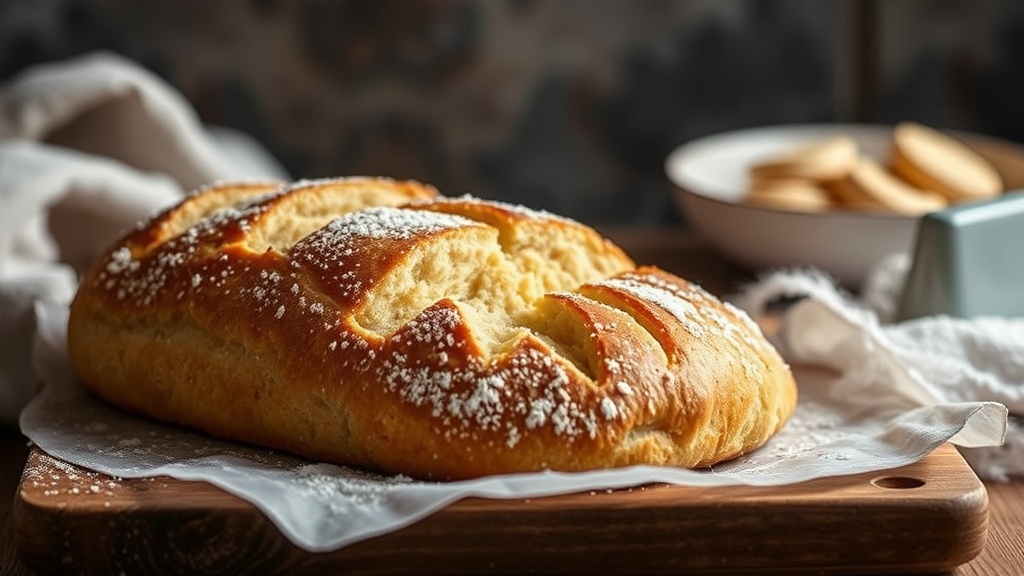
Why Your Homemade Bread Crust Stays Soft and Soggy

Understanding the Mechanics of a Crisp Bread Crust
You'll learn exactly why your homemade loaves are coming out with a dull, soft, or leathery exterior rather than that satisfying, crackling crunch. We're looking at the relationship between moisture, heat, and steam to ensure your next bake hits the mark. Most home bakers struggle with this because they treat the oven like a static box, but bread is a living, breathing process that requires specific environmental controls.
A soft crust isn't just a texture issue—it's a sign that the moisture wasn't managed correctly during the final stages of baking. If your crust feels like rubber or stays soft even after the loaf has cooled, you're likely dealing with one of three culprits: insufficient heat, poor steam management, or an improper cooling process. We'll break down these variables so you can stop guessing and start baking with precision.
Does Bread Need Steam to Get a Good Crust?
The short answer is yes, and if you've ever wondered why professional bakeries produce such beautiful, glossy crusts, this is your answer. Steam serves two main purposes: it keeps the surface of the dough moist and pliable, and it gelatinizes the starches on the exterior. When the surface stays wet, the dough can expand fully (the "oven spring") before the crust hardens. Without that initial window of flexibility, your bread will set too early, resulting in a dense, stunted loaf with a thick, tough skin.
You can achieve this at home without an industrial steam injection system. Many bakers use a Dutch oven—a heavy, lidded pot—to trap the natural moisture escaping from the dough itself. If you don't use a lid, you'll need to introduce steam manually. A common trick is to place a cast iron skillet with boiling water at the bottom of your oven. However, be careful; you don't want to create a humid sauna that never dries out. The goal is a burst of steam at the beginning, followed by a dry heat period to crisp things up.
For more technical details on the physics of dough expansion, the King Arthur Baking resources offer excellent deep dives into how heat affects gluten structure. If you're seeing a pale, soft crust, you likely missed this critical steam phase.
Why Is My Crust Thick and Leathery Instead of Crunchy?
A common frustration is a crust that feels more like a piece of leather than a crisp shell. This usually happens when the bake time is too long at a low temperature, or when the oven temperature drops too significantly during the bake. If the oven isn't hot enough to drive off surface moisture quickly, the crust becomes a thick, chewy barrier that's difficult to bite through.
- Low Oven Temperature: If your oven is set too low, the bread dries out slowly rather than crisping up.
- Excessive Sugar/Fat: High-sugar doughs (like brioche) will brown and harden much faster than lean doughs (like sourdough), which can lead to a soft-centered mess if not timed right.
- Improper Cooling: This is a massive mistake. If you leave your bread in the pan or a closed container, the steam escaping from the crumb will immediately soften the crust.
When you take your bread out of the oven, it must go directly onto a wire cooling rack. This allows air to circulate around the bottom and sides. If the bottom stays in contact with a hot baking sheet, it will continue to "sweat," ruining the texture you worked so hard to create.
How Can I Get a Shatteringly Crisp Crust Every Time?
To get that professional, shatteringly crisp crust, you need to master the transition from steam to dry heat. Many bakers use a two-stage approach. Start with the steam (or the Dutch oven lid) for the first 15–20 minutes to allow for maximum expansion. Then, remove the lid or introduce a vent to let the steam escape. This stage is where the magic happens; the dry, intense heat will dehydrate the outer layer and create that coveted crunch.
| Method | Pros | Cons |
|---|---|---|
| Dutch Oven | Excellent steam retention; very consistent. | Requires heavy cookware; limits loaf size. |
| Steam Tray | Works with standard baking sheets. | Can be messy; harder to control steam levels. |
| No Steam | Easiest setup. | Resulting crust is often thick and dull. |
If you're looking for a more scientific breakdown of fermentation and crust development, The Baking Club has several guides on crust-related variables. A perfect crust is a balance of heat, moisture, and time—not just a single setting on your dial.
Don't forget that the quality of your flour matters too. High-protein bread flour provides the structural integrity needed to hold up a thick, crisp crust. If your flour has a lower protein content, the crust might end up more "bready" and less "crunchy" because the structure simply can't support the tension required for a hard shell. Experiment with your hydration levels as well; a slightly wetter dough often yields a more dramatic crust if handled with care.
Keep an eye on your oven's temperature accuracy. Many home ovens are off by 25 degrees or more. If you're consistently getting soft crusts despite using steam, your oven might be running cooler than the recipe suggests. Using an oven thermometer is a small investment that pays off in consistent results. Once you master the interplay of steam and dry heat, you'll stop producing "bread" and start producing actual loaves with character.